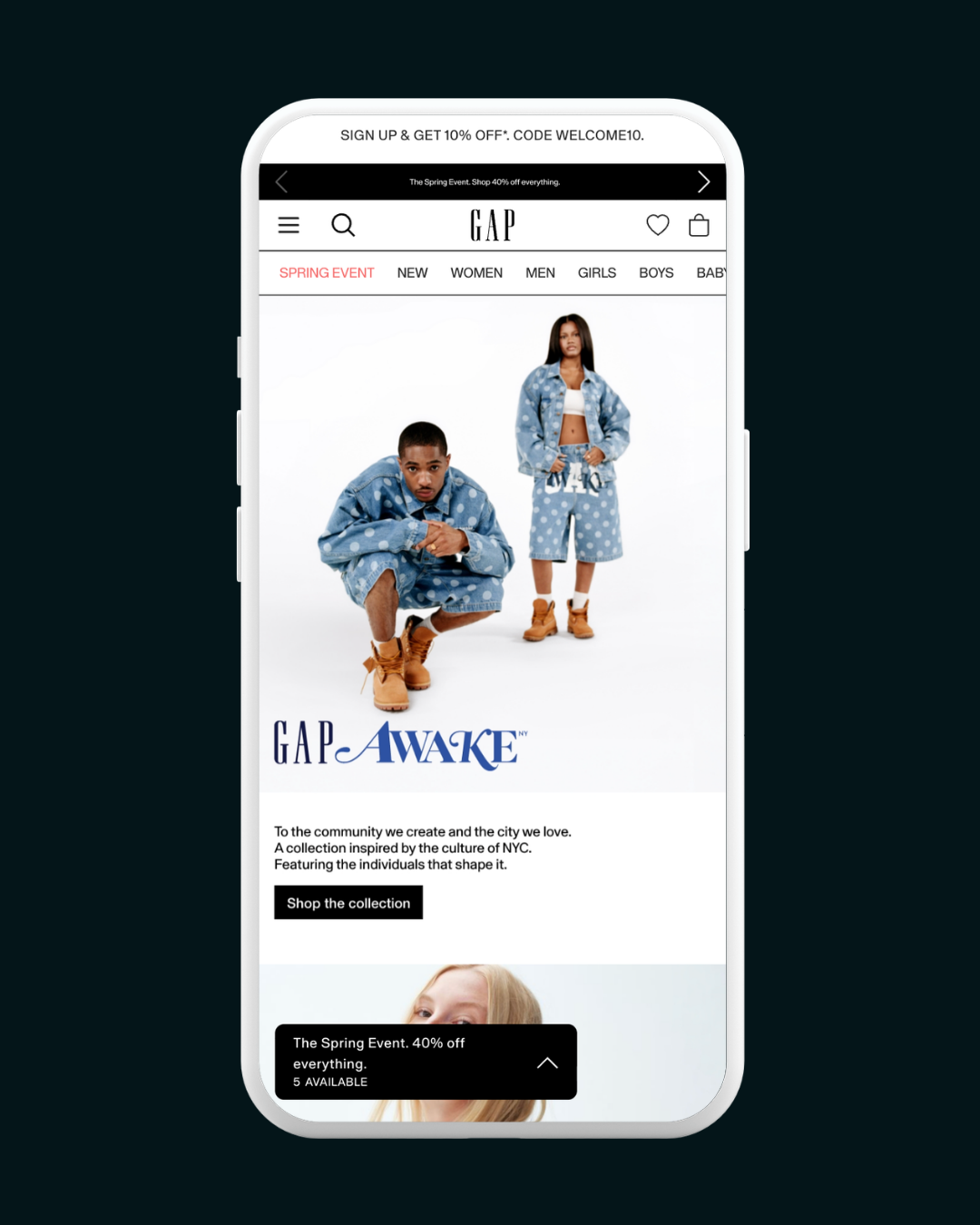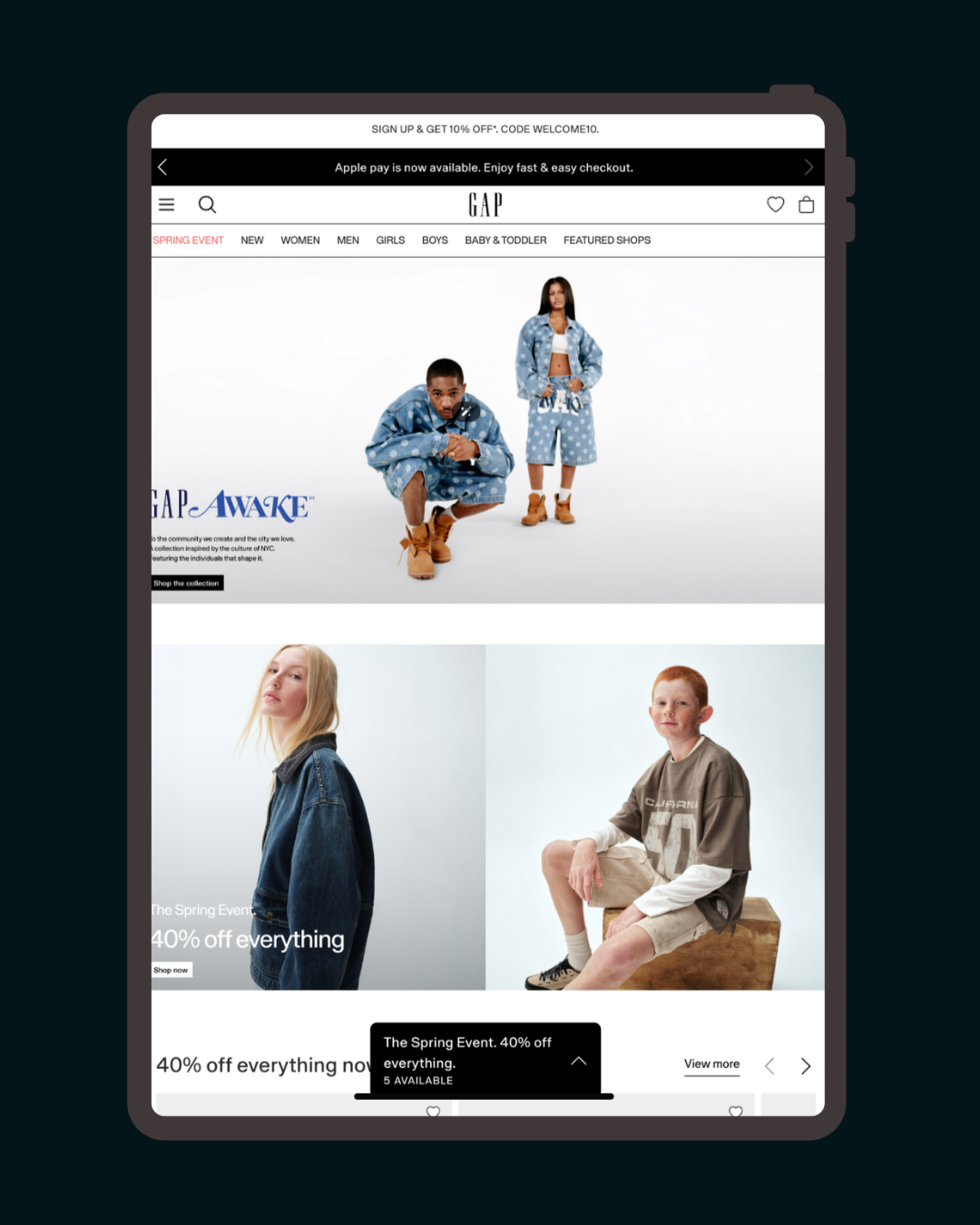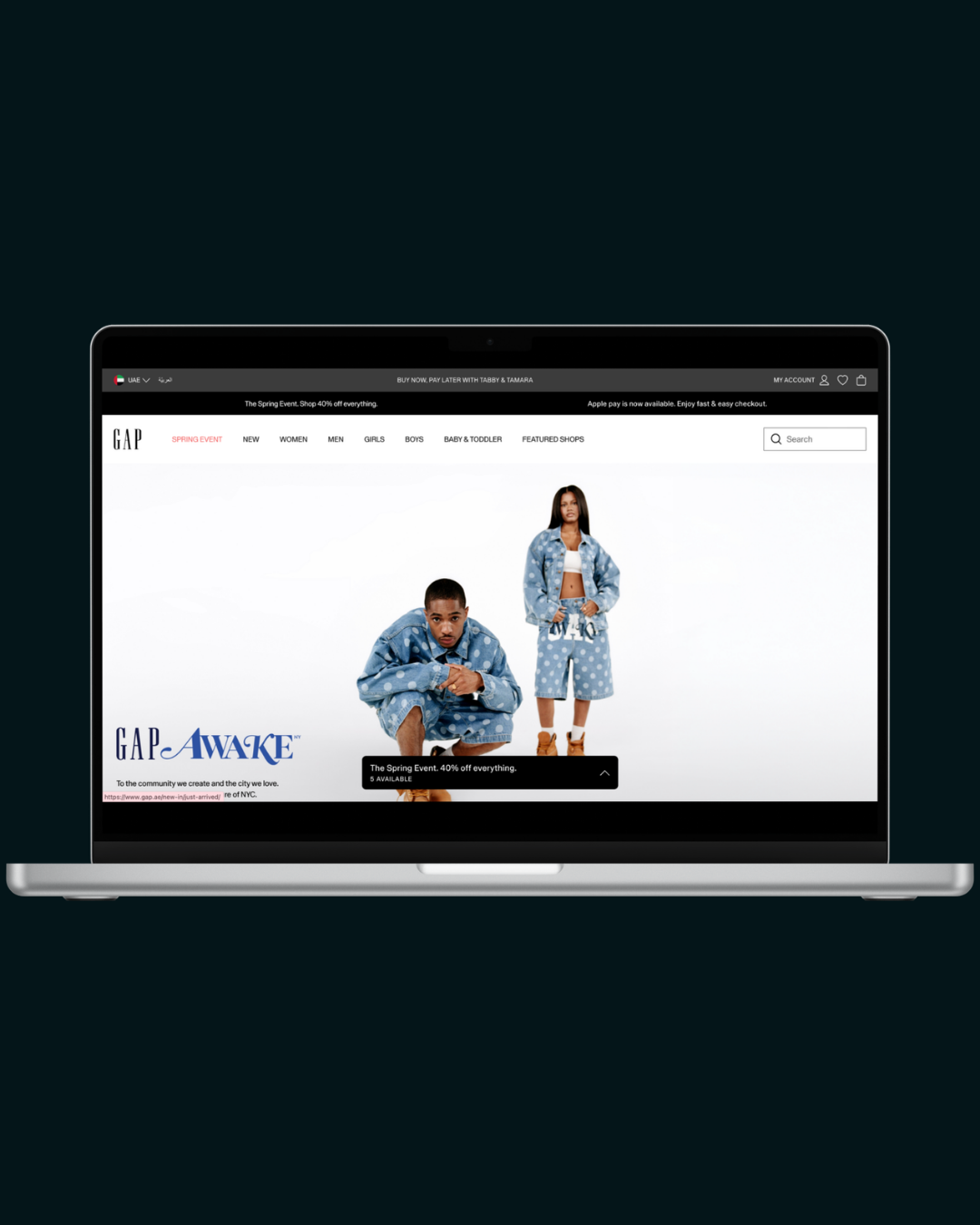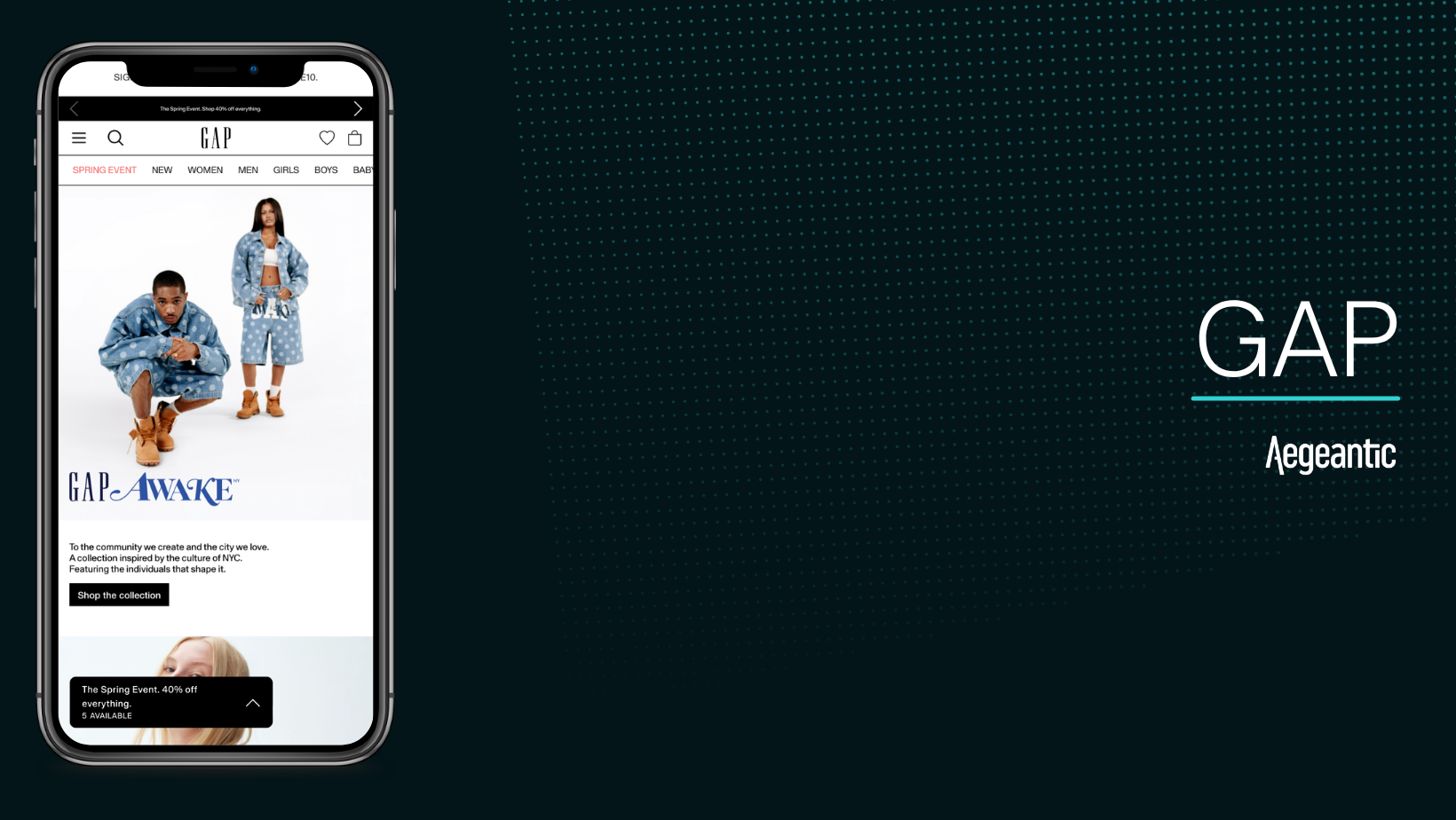

GAP is one of the world’s most recognizable apparel brands, known for its modern essentials, timeless American style, and multi-generational appeal. Since its founding in 1969, GAP has grown into a global fashion icon, offering versatile collections across men’s, women’s, and children’s categories. Its brand identity is built on simplicity, quality, and everyday wearability — making it a staple in wardrobes around the world.
In the Middle East, Al Tayer Group serves as the official distributor and operator of GAP, managing the brand’s presence across physical retail and digital channels. With decades of experience representing leading global brands, Al Tayer combines deep regional expertise with strong operational capabilities across supply chain, retail management, and digital commerce.
As customer expectations evolved and digital commerce became increasingly central to retail growth, Al Tayer Group recognized the need to modernize GAP’s online platform. The objective was not only to upgrade technology, but to create a future-ready digital ecosystem capable of:
Supporting multi-market operations across the GCC
Delivering fully localized experiences in English and Arabic (RTL)
Enabling real-time inventory visibility and omnichannel fulfillment
Offering flexible regional payment options
Seamlessly integrating with enterprise retail systems
Preparing the foundation for mobile app expansion on iOS and Android
The project marked a strategic shift from an existing Magento platform to a modern Salesforce Commerce Cloud and PWA Kit architecture, aligning GAP Middle East with enterprise-grade commerce standards while preserving customer continuity.
This initiative positioned GAP not just as a strong physical retail presence in the region, but as a digitally optimized omnichannel brand, operated under Al Tayer Group’s robust retail infrastructure and built for long-term scalability.
01. The Challenge
The GAP Middle East initiative was far more than a platform upgrade. It was a complex enterprise migration — transitioning from an established Magento environment to a modern Salesforce Commerce Cloud (SFCC) with PWA Kit architecture, while maintaining operational continuity across multiple markets under Al Tayer Group’s retail ecosystem.
The project required balancing three critical priorities simultaneously:
Seamless customer continuity
Deep enterprise system alignment
Long-term scalability and performance modernization
Enterprise-Scale Magento Migration
The existing Magento platform supported active customers, live operations, and ongoing transactions. Migrating away from it required:
Securely transferring customer accounts and user data, ensuring login continuity and password integrity
Migrating catalog structures, product data, and pricing rules while optimizing taxonomy
Rebuilding promotions, checkout flows, and post-purchase journeys
Maintaining SEO equity and URL structures where possible
Ensuring zero disruption to live operations during cutover
This was not a simple replatform — it required careful architectural redesign, data validation, and phased testing to guarantee business continuity.
Alignment with Al Tayer Group’s Enterprise Ecosystem
Unlike standalone eCommerce environments, GAP Middle East operates within Al Tayer Group’s integrated retail infrastructure. The new platform needed to integrate seamlessly with:
A custom Order Management System (OMS)
Retail Management Systems (RMS)
Downstream logistics and reporting platforms
Payment orchestration systems
Communication services such as Twilio
This required building reliable, scalable APIs and ensuring real-time synchronization of inventory, orders, and fulfillment logic.
Any inconsistency between systems could result in overselling, order delays, or customer dissatisfaction — making integration precision critical.
Multi-Market Operational Complexity
The platform needed to support United Arab Emirates and Kuwait, each with distinct:
Currency and pricing models
Delivery configurations
Payment method preferences
Regulatory and tax considerations
At the same time, it had to deliver fully localized experiences in English and Arabic, including full RTL rendering, without duplicating operational effort.
Managing multiple markets from a single Salesforce Commerce Cloud backend required careful configuration of site architecture, promotions, inventory segmentation, and fulfillment rules.
Advanced Checkout & Regional Payment Diversity
The GCC market requires broad payment flexibility. The platform had to support:
Checkout.com as the primary PSP
Global wallets such as Apple Pay and PayPal
Regional Buy Now, Pay Later providers Tabby and Tamara
Cash on Delivery
The ability to process multiple payment methods within a single order
Implementing this while maintaining performance, security, and a smooth checkout experience added another layer of technical complexity.
Omnichannel & Fulfillment Sophistication
Customers expect flexibility across delivery and pickup. The new solution needed to enable:
Real-time stock visibility
Store Pickup (Click & Collect)
Multi-shipment orders across fulfillment locations
Delivery slot selection directly within the checkout flow
This required tight orchestration between SFCC, OMS, and RMS to ensure accurate order routing and customer communication.
Performance Modernization with PWA Architecture
The shift to Salesforce PWA Kit introduced a headless architecture designed to improve:
Mobile-first performance
Scalability during peak campaigns
Long-term flexibility for future features
However, implementing a PWA storefront within an enterprise ecosystem required careful coordination between frontend services, backend commerce logic, and third-party integrations.
Preparing for Mobile Applications
Beyond the web storefront, the architecture had to support future iOS and Android mobile applications, ensuring:
Shared commerce services
Unified customer accounts
Consistent order management across channels
API readiness for app-based commerce
The challenge was to design an ecosystem that would not need to be re-engineered when mobile apps were introduced.
02. The Solution
To address the complexity of the Magento migration and enterprise alignment, we designed and delivered a Salesforce-centered, API-first commerce ecosystem that modernized GAP Middle East’s digital platform while preserving operational continuity under Al Tayer Group’s retail infrastructure.
The solution was structured around the core challenges of migration stability, system integration precision, multi-market scalability, and future readiness.
1. Structured Magento → Salesforce Commerce Cloud Migration
To ensure a seamless transition from Magento, we implemented a carefully phased migration strategy:
Customer account migration, preserving user credentials and enabling uninterrupted login access
Secure transfer and validation of customer data and historical records
Catalog restructuring and optimization within Salesforce Commerce Cloud (SFCC)
Reimplementation of promotions, pricing rules, checkout logic, and post-purchase workflows
SEO-conscious URL handling to minimize search performance disruption
This approach ensured business continuity, minimized operational risk, and improved long-term maintainability.
2. Deep Integration with Al Tayer Group’s Enterprise Systems
To align the platform with Al Tayer’s retail ecosystem, we integrated SFCC with:
A custom Order Management System (OMS) for real-time order orchestration
Retail Management Systems (RMS) for inventory and retail alignment
Downstream logistics and reporting platforms
Twilio for real-time customer notifications
The OMS integration enabled:
Real-time availability checks across warehouses and stores
Intelligent order routing logic
Synchronization between storefront inventory and backend fulfillment
Accurate order lifecycle management
This ensured that digital commerce operated as a natural extension of Al Tayer’s physical retail operations.
3. Multi-Market & Multi-Language Architecture
We configured Salesforce Commerce Cloud to support:
Distinct site configurations for United Arab Emirates and Kuwait
Market-specific pricing, currency, and fulfillment rules
Unified backend management with localized storefront presentation
Fully localized English and Arabic experiences, including complete RTL support
This multi-site architecture reduced operational duplication while preserving regional flexibility.
4. Advanced Checkout & Payment Orchestration
To address the diverse payment landscape, we implemented Checkout.com as the primary Payment Service Provider, supporting:
Credit and debit cards
Apple Pay
PayPal
Tabby and Tamara
Cash on Delivery
Multi-payment within a single order
Checkout flows were optimized for performance and minimal friction, ensuring flexibility without compromising speed or reliability.
5. Omnichannel Fulfillment Enablement
To support flexible customer journeys, we implemented:
Store Pickup (Click & Collect) with real-time store-level availability
Multi-shipment functionality, enabling a single order to be fulfilled from multiple locations
Delivery slot selection directly within SFCC
Accurate delivery promise calculation powered by OMS integration
This orchestration allowed GAP Middle East to provide omnichannel convenience while maintaining operational control.
6. PWA Kit Performance Modernization
The frontend was rebuilt using Salesforce PWA Kit, delivering:
Mobile-first, app-like performance
Faster load times compared to the legacy Magento setup
Improved scalability during campaign peaks
SEO-friendly architecture
This headless implementation modernized the digital experience while maintaining deep backend integration.
7. Marketing, Loyalty & Engagement Continuity
To support customer retention and lifecycle engagement:
Salesforce Marketing Cloud was integrated to power campaign automation and abandoned cart recovery
A loyalty program was implemented to encourage repeat purchases
eGift card and Gift Registry functionality was introduced to support gifting journeys
These capabilities ensured customer engagement remained strong throughout and after the migration.
8. Mobile Application Readiness
The new architecture was designed with mobile expansion in mind:
API-first commerce services ready for consumption by iOS and Android applications
Unified customer accounts across web and mobile
Shared backend logic for orders, payments, and loyalty
This eliminated the need for future replatforming when mobile apps were introduced.
A Modern, Enterprise-Ready Commerce Foundation
By combining Salesforce Commerce Cloud, PWA Kit, OMS integration, advanced payment orchestration, and Marketing Cloud, we delivered a modernized commerce ecosystem that:
Preserved customer continuity
Improved performance and scalability
Strengthened enterprise integration
Enabled omnichannel flexibility
Prepared the platform for long-term growth
The GAP Middle East solution now operates as a fully integrated digital commerce extension of Al Tayer Group’s retail operations, positioned to scale efficiently across channels and markets.

03. The Results
The migration of Gap Middle East from Magento to Salesforce Commerce Cloud (PWA Kit architecture) delivered measurable improvements across performance, operational efficiency, customer experience, and enterprise alignment under Al Tayer Group.
Rather than simply replacing technology, the initiative established a more stable, scalable, and intelligent commerce ecosystem.
1. Seamless Migration with Zero Business Disruption
Despite the complexity of migrating active customers and live operations:
Customer accounts were successfully transitioned without login interruption
Order continuity was maintained throughout cutover
Catalog integrity and promotional logic were preserved
SEO performance remained stable during and after launch
The migration was executed with minimal operational downtime, ensuring uninterrupted business activity across the UAE and Kuwait.
2. Improved Platform Performance & Scalability
The shift to PWA Kit resulted in:
Faster page load times, particularly on mobile devices
Improved frontend responsiveness
Greater stability during peak traffic events and campaigns
Reduced dependency on legacy platform limitations
The new architecture provides a foundation capable of supporting high-volume traffic without performance degradation.
3. Real-Time Inventory Accuracy & Reduced Overselling
Through deep integration with the custom OMS and RMS systems:
Real-time stock validation significantly reduced inventory discrepancies
Overselling incidents were minimized
Order routing accuracy improved
Delivery promises became more reliable
This strengthened operational control while improving customer trust.
4. Checkout Optimization & Payment Flexibility
The integration of Checkout.com alongside regional and global payment methods delivered:
Broader payment acceptance across UAE and Kuwait
Increased checkout flexibility with multi-payment capability
Smoother digital wallet experiences
Reduced payment-related friction
By accommodating regional Buy Now, Pay Later providers and Cash on Delivery alongside digital wallets, the platform aligned more closely with GCC consumer preferences.
5. Omnichannel Enablement
With the implementation of:
Store Pickup (Click & Collect)
Multi-shipment capabilities
Delivery slot selection
Unified OMS orchestration
GAP Middle East successfully expanded its omnichannel offering, aligning digital commerce with physical retail operations under Al Tayer Group.
Customers gained greater flexibility, while internal teams benefited from structured fulfillment logic and centralized visibility.
6. Stronger Customer Retention & Engagement
With Salesforce Marketing Cloud integration and abandoned cart workflows:
Customer re-engagement improved
Cart recovery automation enhanced conversion opportunities
Loyalty integration strengthened repeat purchase behavior
eGift cards and gift registry features expanded gifting journeys
The ecosystem now supports sustained lifecycle marketing rather than transactional engagement alone.
7. Enterprise Alignment & Operational Efficiency
Post-migration, GAP Middle East benefits from:
A centralized commerce backbone aligned with Al Tayer Group’s systems
Reduced manual reconciliation between digital and retail systems
Improved reporting accuracy across sales and fulfillment
Better coordination between commerce, marketing, and operations teams
The new platform eliminated legacy fragmentation and introduced a more integrated enterprise commerce model.
8. Mobile Ecosystem Readiness
With API-first architecture and backend unification:
The platform is fully prepared for iOS and Android mobile app support
Customer accounts, orders, loyalty, and payments operate consistently across channels
Future channel expansion can occur without structural rework
This future-proofs the investment and reduces long-term technical debt.
A Measurable Step Forward
The migration to Salesforce Commerce Cloud was not simply a technology replacement — it delivered:
Greater operational reliability
Improved inventory accuracy
Faster and more scalable performance
Enhanced checkout flexibility
Stronger omnichannel coordination
Increased readiness for mobile expansion
GAP Middle East now operates on a modern, enterprise-grade commerce foundation fully aligned with Al Tayer Group’s regional retail strategy, positioning the brand for sustained digital growth across markets.
04. Conclusion
The GAP Middle East initiative represents a successful evolution of a mature eCommerce operation — transitioning from a legacy Magento platform to a modern, scalable Salesforce Commerce Cloud architecture powered by PWA Kit, while maintaining continuity for customers, operations, and business teams.
Delivered under Al Tayer Group, the project required more than a technical migration. It demanded deep alignment with enterprise retail systems, operational rigor, and a platform capable of supporting omnichannel growth across United Arab Emirates and Kuwait, in both English and Arabic.
By integrating Salesforce Commerce Cloud with a custom OMS, RMS, Salesforce Marketing Cloud, advanced payment orchestration, and real-time communication services, we delivered a unified commerce ecosystem that connects storefronts, fulfillment, marketing, and customer engagement into a single operational flow.
The new platform not only improves performance and scalability, but also introduces critical capabilities such as real-time availability, Click & Collect, multi-shipment fulfillment, flexible regional payments, loyalty, gifting, and lifecycle marketing — all while preserving existing customer relationships through a carefully executed user migration.
Equally important, the solution was architected with the future in mind. With API-first design and shared backend services, GAP Middle East is now fully prepared to extend commerce experiences into iOS and Android mobile applications, without the need for further replatforming.
This project demonstrates our ability to deliver complex Salesforce Commerce Cloud migrations at enterprise scale — helping global brands modernize their digital platforms while operating seamlessly within large regional retail organizations.
For GAP Middle East and Al Tayer Group, the result is a future-ready, omnichannel commerce foundation built for stability today and growth tomorrow.